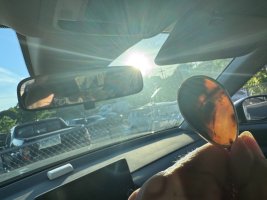
Iridescence and chatoyancy in a mabe pearl

12wentworth

Member
Joined
Sep 26, 2018
Messages
19
Location
Boston, MA
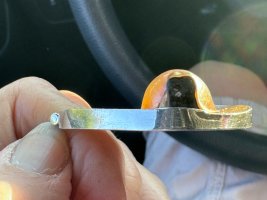
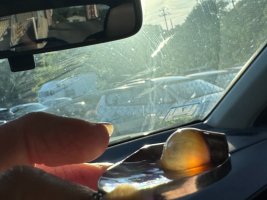
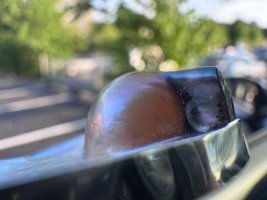
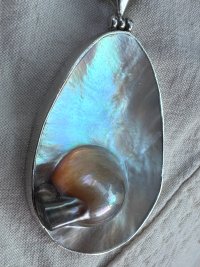
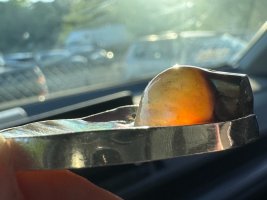
Hi! My daughter gave me a mabe pearl for Mother's Day. At first I thought it was just a nice pendant until I got a load of the seeming clarity and translucency of the blister pearl. There is no backing to the piece of shell with the mabe but I can make out an area where there is a plug. No bead is visible in the center, so I am assuming a clear filler was used to support a natural blister pearl with thin nacre. It even has a star asterism that floats about, too. Here are some pictures. The inner light of this pearl knocks me out. Is this a usual occurrence in these types of pearls?
 

Attachments
  • IMG_1522.jpeg
    IMG_1522.jpeg
    911.9 KB · Views: 55
  • IMG_1521.jpeg
    IMG_1521.jpeg
    965 KB · Views: 49
  • IMG_1520.jpeg
    IMG_1520.jpeg
    1 MB · Views: 45
  • IMG_1512.jpeg
    IMG_1512.jpeg
    989.2 KB · Views: 44
  • IMG_1525.jpeg
    IMG_1525.jpeg
    1.5 MB · Views: 47
  • IMG_1514.jpeg
    IMG_1514.jpeg
    775.8 KB · Views: 49
  • IMG_1516.jpeg
    IMG_1516.jpeg
    971.2 KB · Views: 33
Last edited:
The Mabe pearl is clearly thin nacred and has a clear issue (I used to call these "tunnels") that will cause issues with this piece...very likely cracking.
It was probably filled with clear epoxy. They should have used a non-translucent white, beige or gray for visual effectiveness.
You have to be careful with it! Avoid hitting it inasmuch as possible!
But it is a good-looking piece: big, bold!
 
The Mabe pearl is clearly thin nacred and has a clear issue (I used to call these "tunnels") that will cause issues with this piece...very likely cracking.
It was probably filled with clear epoxy. They should have used a non-translucent white, beige or gray for visual effectiveness.
You have to be careful with it! Avoid hitting it inasmuch as possible!
But it is a good-looking piece: big, bold!
I agree. It's a cut piece which has been resin coated, if not filled. The profile of the outer margin at the outermost sectioned line presents with the transparency and colour of epoxy resin.

Using resin to stabilize, coat or fill a piece is not novel. They fashioned something wearable out of something that probably was not, so it's all good.
 
Mabe pearls are normally made by placing a shape, like a half dome, against the inside of the mollusk's shell and letting a thin layer of pearl nacre build up over the shape. When the pearl is harvested, it is cut out of the shell and the shape is removed. The empty space is filled with resin or glue, and usually a slice of mother of pearl is glued to the back.
 
Back
Top