Lalada Bohle
Member
- Joined
- May 28, 2026
- Messages
- 3


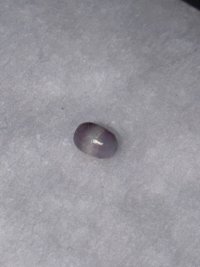
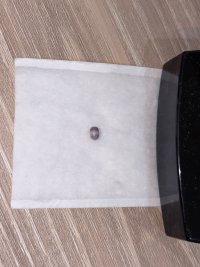
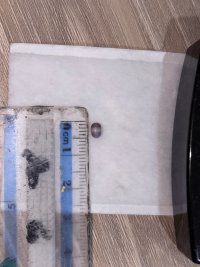
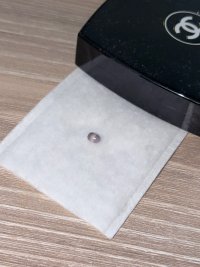
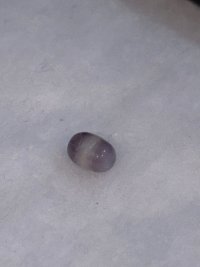
Thank you for your response! What would you say with the size of it, will it be valuable?Looks like a quahog pearl-- congrats! Nice find!
 www.karipearls.com

Speaking of "cooking" pearls, how is blanching pearls (quahog in this case) embedded inside the clam different from using hot water to loosen pearls from their settings, or heating pearls during maeshori (IIRC being one of the steps)? Is it the time and/or temperature? Or something else?A quahog is a rare find. This one isn't terribly valuable, though. The color and white banding aren't ideal. It does look like it cracked when flash fried. That's an issue with a lot of the naturals that are found. People often bite into them after it's been steamed or fried. And a cooked pearl is usually a cracked pearl.

Pearls can crack from expansion during cooking for two reasons. First, thermal co-efficiency where dissimilar materials expand and contract at different rates, thus causing cracks. The other being gas expansion. Pearls in situ have a slightly higher moisture content than stored pearls and may expand when heated.Speaking of "cooking" pearls, how is blanching pearls (quahog in this case) embedded inside the clam different from using hot water to loosen pearls from their settings, or heating pearls during maeshori (IIRC being one of the steps)? Is it the time and/or temperature? Or something else?

This was so interesting to look at, especially the bit near the bottom about the Golash Brooch. Golash Quahog Pearl Brooch - Pearl of Venus, an extremely rare, purple-colored, button-shaped, non-nacreous pearl (https://internetstones.com/the-golash-quahog-pearl-brooch-the-pearl-of-venus.html)Quahog pearls can be pricey. I am not an expert on quahogs, but in general, beautiful purple colors are more valuable than white, and with pearls in general round shaped pearls are preferred to non-round shapes. But many non-round quahogs fetch a good price! Also, surface quality matters.
Are those cracks I see?
Was the pearl found in a cooked clam or raw?
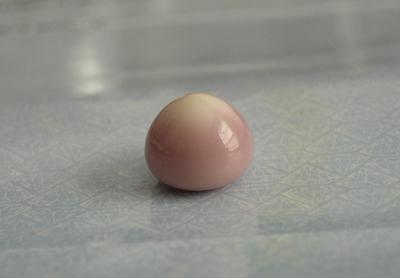
Here is a website where one can buy quahog and other natural pearls. It may give you an idea of their retail value. (If you were to sell it, the buyer would have to be able to mark it up to sell it).
Quahog Pearls for Sale
Quahog pearls for sale...pearls from eastern USA. Three lavender disk shaped quahogs for sale.
You may wish to consider having it set and wearing it. It is certainly a conversation piece!

As far as I know, quahog pearls are mainly a collector’s item. I have never personally seen a piece of jewelry utilizing them, aside from those very rare mixed natural pearl strands. I don’t see why they couldn’t be used, though. This little one is absolutely adorable.This was so interesting to look at, especially the bit near the bottom about the Golash Brooch. Golash Quahog Pearl Brooch - Pearl of Venus, an extremely rare, purple-colored, button-shaped, non-nacreous pearl (https://internetstones.com/the-golash-quahog-pearl-brooch-the-pearl-of-venus.html)
Do you know, is the quahog pearl market mostly jewelers, or collectors? I'm sure there are both, but mostly?
Thanks for sharing!