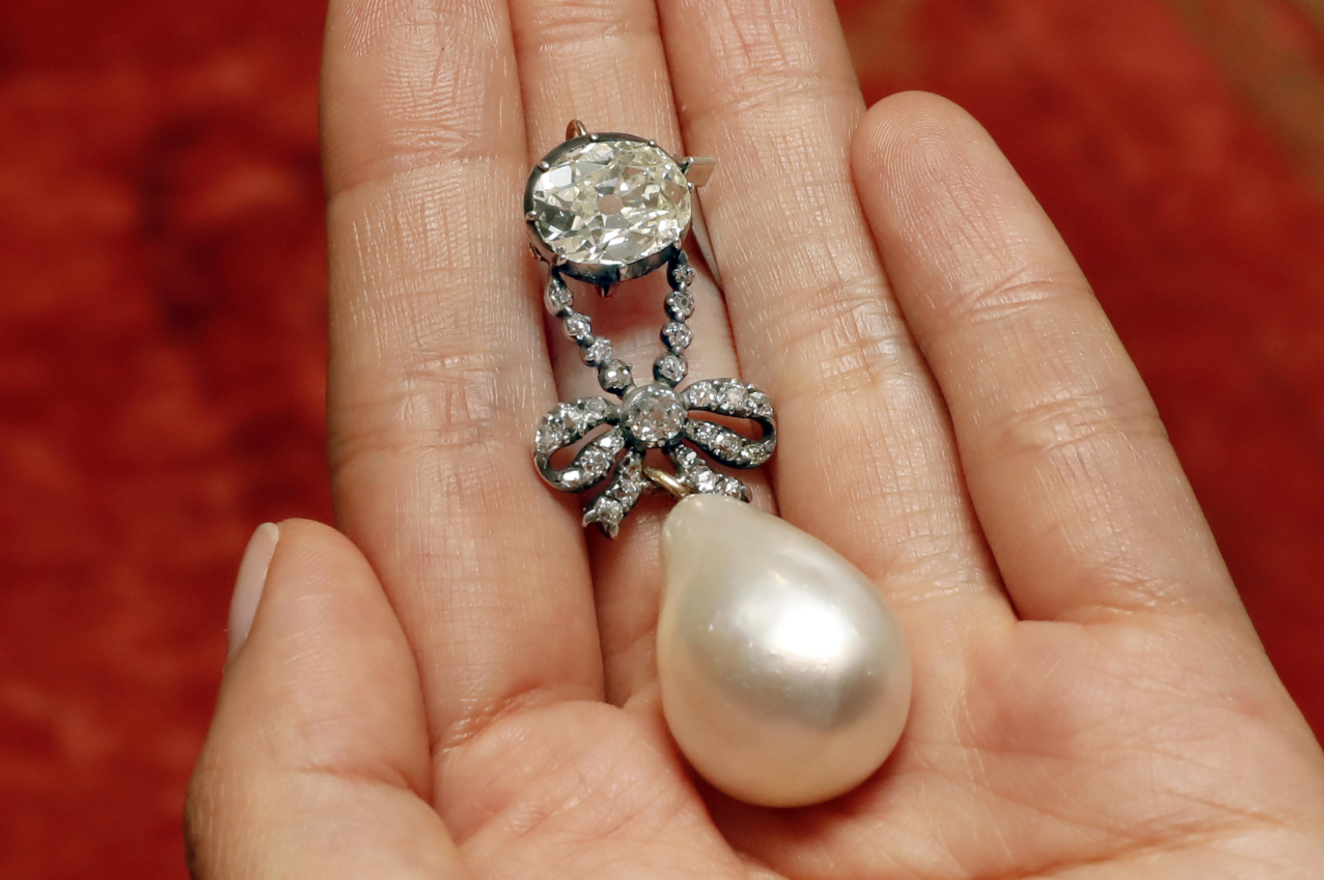
How Marie Antoinette’s extraordinary natural pearl survived a revolution, passed through generations of European royalty, and demonstrated the remarkable power of provenance.
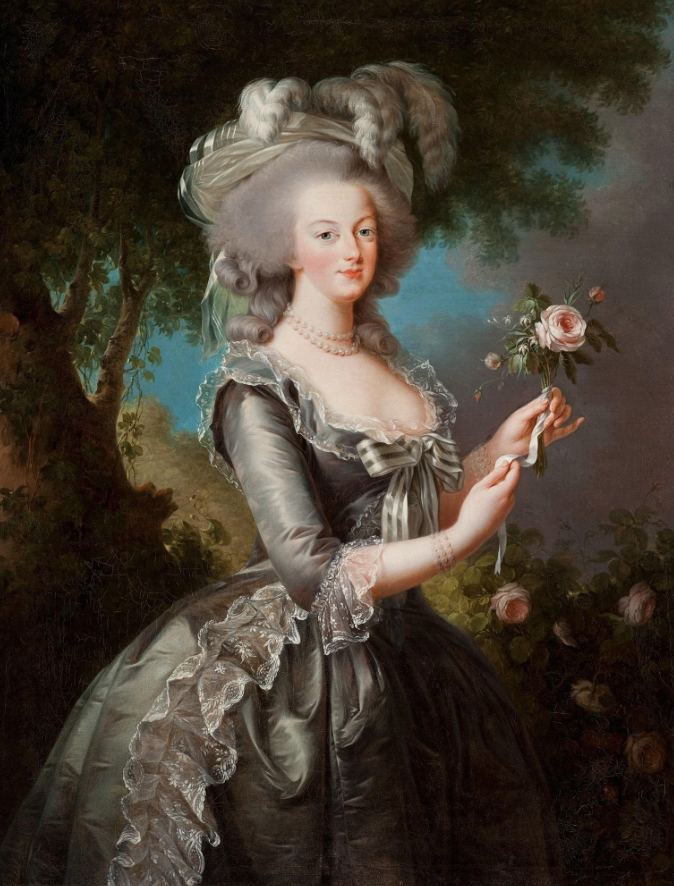
A Queen's Last Treasure
Imagine Paris in the spring of 1791.
Beyond the walls of the Tuileries Palace, revolutionary sentiment is sweeping through France. A monarchy that has endured for centuries is approaching its collapse, and the woman who once embodied the extravagance of Versailles is preparing for escape.
Marie Antoinette entrusts some of her most precious jewels to Count Mercy d’Argenteau, a loyal Austrian diplomat. Carefully packed into a wooden chest, the treasures are secretly transported to Brussels before being sent to Austria for safekeeping.
Among the jewels believed to have made that journey was an exceptional natural saltwater pearl, nearly 26 millimeters long.
The queen would never see it again.
On October 16, 1793, Marie Antoinette was executed by guillotine. Her pearl, however, would survive the French Revolution, the fall of empires, two world wars, and more than two centuries of European political upheaval.
Eventually, it would become the centerpiece of the most expensive natural pearl jewel ever sold at auction.
When Pearls Belonged to Royalty
In eighteenth-century Europe, long before the development of commercial pearl cultivation, fine natural pearls ranked among the most desirable gemstones in existence.
Merchants supplied European aristocrats with pearls harvested from the Persian Gulf, the waters surrounding Ceylon, and the Caribbean fisheries of the Americas.
Unlike diamonds, which could be cut and polished to enhance their appearance, the beauty of a natural pearl depended largely upon what nature had already accomplished inside a living mollusk.
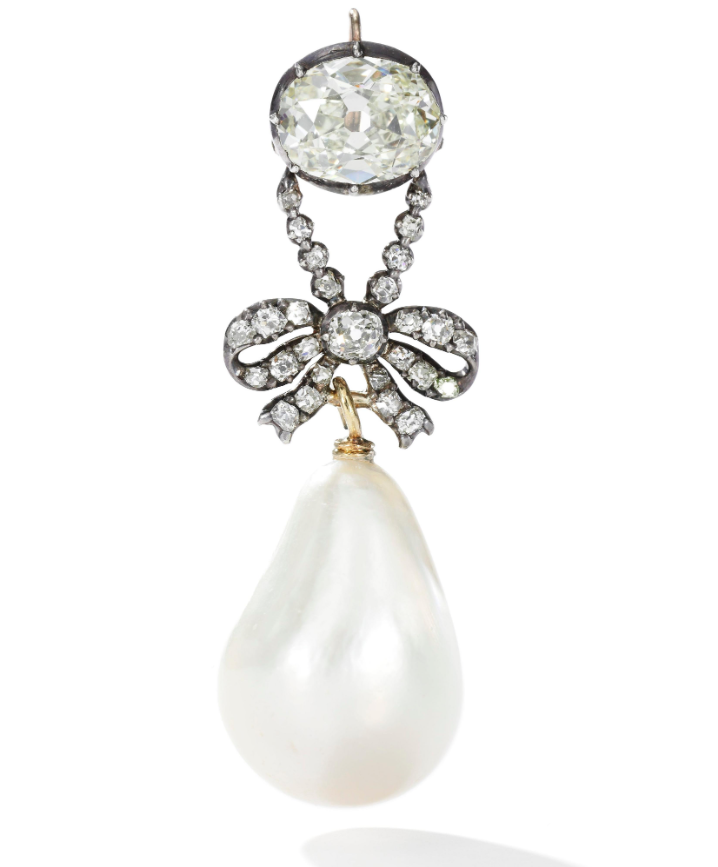
Marie Antoinette's remarkable pearl measured approximately 15.90 × 18.35 × 25.85 millimeters. Slightly baroque and elegantly elongated, it possessed a delicate cream bodycolor, subtle pink and green overtones, and fine luster.
The Persian Gulf has been suggested as its probable source, although its precise geographical origin remains unconfirmed.
Its original setting was part of an elaborate three-strand pearl necklace. The large diamond now positioned above the pendant once served as the necklace's clasp. Subsequent generations transformed these components into the magnificent jewel we recognize today.
Two Centuries Behind Closed Doors
The survival of the pearl owes much to Marie Antoinette's only surviving child, Marie-Thérèse.
Released from captivity in December 1795, shortly after turning seventeen, the princess traveled to Vienna, where her mother's treasures had found refuge.
Following her death in 1851, the pearl passed to her niece and adoptive daughter, Louise, Duchess of Parma, before descending through successive generations of the Bourbon-Parma family.
Unlike countless royal jewels that were confiscated, dismantled, stolen or dispersed, this extraordinary treasure remained within an extended royal dynasty.
Equally important, the family preserved inventories, photographs and inheritance documents.
These records would eventually become almost as significant as the jewel itself, allowing specialists to reconstruct its ownership and identify modifications made over the centuries.
For generations, the pearl remained largely beyond public view.
That changed in November 2018.
The Night a Pearl Made History
On November 14, collectors gathered at Sotheby's in Geneva for the auction of the Bourbon-Parma royal jewels.
Marie Antoinette's pendant, designated Lot 100, carried a presale estimate of approximately US$1 million to US$2 million.
Bidding began at 900,000 Swiss francs.
Then something remarkable happened.
The price climbed beyond six million Swiss francs, eventually reaching a hammer price of 32 million. Including the auction premium, the final purchase price was 36,427,000 Swiss francs (CHF), equivalent to approximately US$36.1 million at the time of the auction.
More than eighteen times the upper estimate.
The buyer was Austrian collector Heidi Horten, whose acquisition was subsequently documented in museum records.
The pendant returned to public attention in September 2025, when it appeared in the Victoria and Albert Museum's Marie Antoinette Style exhibition in London.
A jewel once concealed from revolutionaries was now displayed for the world to admire.
The Science Behind the History
Before the auction, the Swiss Gemmological Institute (SSEF) subjected the pearl to scientific examination, establishing its identity as a natural saltwater pearl.
But there is an important distinction.
Science established what the pearl was.
Historical documentation established whose pearl it was.
Neither form of evidence could entirely replace the other.
A laboratory can examine a pearl's internal growth structures, chemical characteristics and other gemological properties. It cannot, through laboratory testing alone, establish that a particular queen once wore it.
That requires provenance.
When History Becomes Part of the Value
Provenance is the documented history of an object's ownership, origin and passage through time.
In the world of natural pearls, reliable provenance can transform an exceptional gemstone into an irreplaceable cultural artifact.
However, age alone does not necessarily establish historical significance, just as an intriguing story does not constitute evidence. Authentic provenance requires credible documentation that connects the object to its past.
Marie Antoinette's pearl illustrates the extraordinary convergence of natural rarity, scientific authentication and historical continuity.
Another mollusk might produce a pearl of comparable size, color and beauty.
But no other mollusk could reproduce its history.
Perhaps that is what the successful bidder ultimately purchased in Geneva: not simply an extraordinary product of nature, but a tangible connection to a vanished world.
More than two centuries after the last queen of pre-revolutionary France lost her crown, her pearl still commands the attention of the world.
Nature created it. History made it priceless.
A Queen's Last Treasure
Imagine Paris in the spring of 1791.
Beyond the walls of the Tuileries Palace, revolutionary sentiment is sweeping through France. A monarchy that has endured for centuries is approaching its collapse, and the woman who once embodied the extravagance of Versailles is preparing for escape.
Marie Antoinette entrusts some of her most precious jewels to Count Mercy d’Argenteau, a loyal Austrian diplomat. Carefully packed into a wooden chest, the treasures are secretly transported to Brussels before being sent to Austria for safekeeping.
Among the jewels believed to have made that journey was an exceptional natural saltwater pearl, nearly 26 millimeters long.
The queen would never see it again.
On October 16, 1793, Marie Antoinette was executed by guillotine. Her pearl, however, would survive the French Revolution, the fall of empires, two world wars, and more than two centuries of European political upheaval.
Eventually, it would become the centerpiece of the most expensive natural pearl jewel ever sold at auction.
When Pearls Belonged to Royalty
In eighteenth-century Europe, long before the development of commercial pearl cultivation, fine natural pearls ranked among the most desirable gemstones in existence.
Merchants supplied European aristocrats with pearls harvested from the Persian Gulf, the waters surrounding Ceylon, and the Caribbean fisheries of the Americas.
Unlike diamonds, which could be cut and polished to enhance their appearance, the beauty of a natural pearl depended largely upon what nature had already accomplished inside a living mollusk.
Marie Antoinette's remarkable pearl measured approximately 15.90 × 18.35 × 25.85 millimeters. Slightly baroque and elegantly elongated, it possessed a delicate cream bodycolor, subtle pink and green overtones, and fine luster.
The Persian Gulf has been suggested as its probable source, although its precise geographical origin remains unconfirmed.
Its original setting was part of an elaborate three-strand pearl necklace. The large diamond now positioned above the pendant once served as the necklace's clasp. Subsequent generations transformed these components into the magnificent jewel we recognize today.
Two Centuries Behind Closed Doors
The survival of the pearl owes much to Marie Antoinette's only surviving child, Marie-Thérèse.
Released from captivity in December 1795, shortly after turning seventeen, the princess traveled to Vienna, where her mother's treasures had found refuge.
Following her death in 1851, the pearl passed to her niece and adoptive daughter, Louise, Duchess of Parma, before descending through successive generations of the Bourbon-Parma family.
Unlike countless royal jewels that were confiscated, dismantled, stolen or dispersed, this extraordinary treasure remained within an extended royal dynasty.
Equally important, the family preserved inventories, photographs and inheritance documents.
These records would eventually become almost as significant as the jewel itself, allowing specialists to reconstruct its ownership and identify modifications made over the centuries.
For generations, the pearl remained largely beyond public view.
That changed in November 2018.
The Night a Pearl Made History
On November 14, collectors gathered at Sotheby's in Geneva for the auction of the Bourbon-Parma royal jewels.
Marie Antoinette's pendant, designated Lot 100, carried a presale estimate of approximately US$1 million to US$2 million.
Bidding began at 900,000 Swiss francs.
Then something remarkable happened.
The price climbed beyond six million Swiss francs, eventually reaching a hammer price of 32 million. Including the auction premium, the final purchase price was 36,427,000 Swiss francs (CHF), equivalent to approximately US$36.1 million at the time of the auction.
More than eighteen times the upper estimate.
The buyer was Austrian collector Heidi Horten, whose acquisition was subsequently documented in museum records.
The pendant returned to public attention in September 2025, when it appeared in the Victoria and Albert Museum's Marie Antoinette Style exhibition in London.
A jewel once concealed from revolutionaries was now displayed for the world to admire.
The Science Behind the History
Before the auction, the Swiss Gemmological Institute (SSEF) subjected the pearl to scientific examination, establishing its identity as a natural saltwater pearl.
But there is an important distinction.
Science established what the pearl was.
Historical documentation established whose pearl it was.
Neither form of evidence could entirely replace the other.
A laboratory can examine a pearl's internal growth structures, chemical characteristics and other gemological properties. It cannot, through laboratory testing alone, establish that a particular queen once wore it.
That requires provenance.
When History Becomes Part of the Value
Provenance is the documented history of an object's ownership, origin and passage through time.
In the world of natural pearls, reliable provenance can transform an exceptional gemstone into an irreplaceable cultural artifact.
However, age alone does not necessarily establish historical significance, just as an intriguing story does not constitute evidence. Authentic provenance requires credible documentation that connects the object to its past.
Marie Antoinette's pearl illustrates the extraordinary convergence of natural rarity, scientific authentication and historical continuity.
Another mollusk might produce a pearl of comparable size, color and beauty.
But no other mollusk could reproduce its history.
Perhaps that is what the successful bidder ultimately purchased in Geneva: not simply an extraordinary product of nature, but a tangible connection to a vanished world.
More than two centuries after the last queen of pre-revolutionary France lost her crown, her pearl still commands the attention of the world.
Nature created it. History made it priceless.
Explore more about the fascinating world of natural pearls, their history, science and enduring cultural significance at www.thecolumbuspearls.com.