My first mabe pearl

hungry4nacre

Member
Joined
Nov 24, 2025
Messages
10
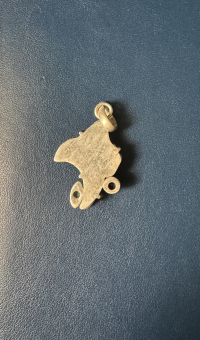
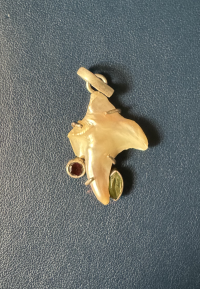
I recently acquired this mabe pearl pendant from an auction. I paid $34.77 after closing costs. Seems like a cream body with some rose overtone. It's also decorated with what looks to be a peridot and either a ruby or garnet. There are no hallmarks on the pendant but I am going to assume it is sterling silver as it also came on a sterling chain (not pictured). There is a chip at the top near the bell but considering this piece is probably older than I am it looks wonderful for its age.

Maybe I got ripped off or maybe I got a great bargain. Either way I absolutely love it!
 

Attachments

  • mabe pearl.png
    mabe pearl.png
    5.3 MB · Views: 21
  • mabe pearl 1.png
    mabe pearl 1.png
    7.6 MB · Views: 18
Somehow it doesn't strike me as a Mabe pearl...looks like a freshwater pearl to me. The flattened back is the setting itself.
It could be a natural blister pearl...I would need to see more details (side photo), but it just doesn't look like a Mabe to me.
But it sure is a very special piece...very interesting!
 
Thank you for your reply. Could you please help me understand the difference between maybe pearls and blister pearls. I understood the formation of both to be the same as when the pearl is formed on the inner shell of the mollusk leading to the flat black and semi- hemisphere surface.

I thought maybe pearls=blister pearls and both were used interchangeably. Please correct my understanding
 
You may wish to read this detailed and highy informative series on mabe and blister pearls, written by @CortezPearls.
It starts here:

 
I thought maybe pearls=blister pearls and both were used interchangeably. Please correct my understanding
Blister is a broad term for a class of pearls. Namely pearls attached to shells resembling that of skin or paint blisters.

There are several types of blisters, many unique in onset to other blisters.

Some form by parasites drilling through shells, others by pearls irrupted from their sacs becoming fused to the shell. Injured mantles, cracked shells, sand... any environmental stress, really. Even auto-immune issues may give rise to bumps in places.

These are popular in folk art and other collections. Some blisters can be quite elegant when fashioned into pieces.
 
Back
Top