Hello,
I recently purchased three pieces of pearl jewellery from Q Pearl & Jewelry in Nha Trang, Vietnam:
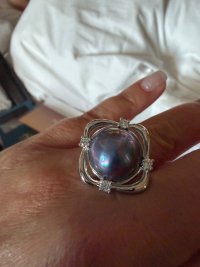
● one ring,
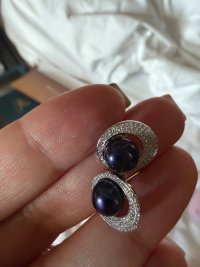
● one pair of large pearl earrings,
● one pair of smaller pearl earrings.
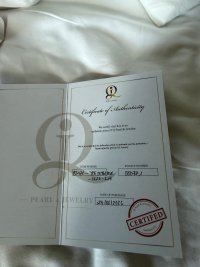
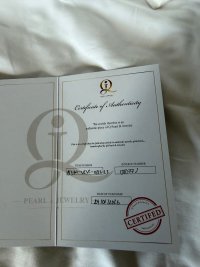
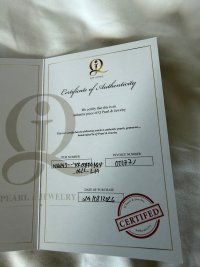
The salesperson told me that the pearls were Japanese. However, the certificates only contain item numbers and a general statement of authenticity. They do not specify the pearl type, origin, size, grade, treatments, metal fineness or the type and weight of the accent stones. The original price tags were retained by the store.
The displayed prices were approximately:
● 16,000,000 VND for the ring,
● 19,000,000 VND for the large earrings,
● 3–4,000,000 VND for the smaller earrings.
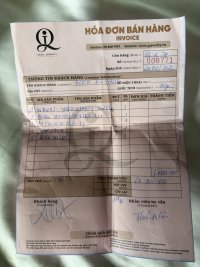
I paid a total of 31,000,000 VND.
The large violet-grey pearls are dome-shaped and strongly iridescent. Do they appear to be cultured mabé pearls, Japanese Kasumi pearls or something else? Do the smaller dark pearls look like Tahitian pearls or possibly dyed freshwater pearls?
Unfortunately, while I was removing one of the large earrings normally after wearing it for the first time, the post completely separated from the body of the earring. I have included photographs of the broken earring and its reverse side.
I would be very grateful for your opinions on:
1. Whether these appear to be genuine cultured pearls.
2. The most likely pearl types.
3. Whether Japanese origin can be reasonably inferred.
4. Whether the prices appear reasonable, depending on the likely materials.
5. Any concerns you notice regarding the jewellery, certificates or workmanship.
Thank you very much for your help.
I recently purchased three pieces of pearl jewellery from Q Pearl & Jewelry in Nha Trang, Vietnam:
● one ring,
● one pair of large pearl earrings,
● one pair of smaller pearl earrings.
The salesperson told me that the pearls were Japanese. However, the certificates only contain item numbers and a general statement of authenticity. They do not specify the pearl type, origin, size, grade, treatments, metal fineness or the type and weight of the accent stones. The original price tags were retained by the store.
The displayed prices were approximately:
● 16,000,000 VND for the ring,
● 19,000,000 VND for the large earrings,
● 3–4,000,000 VND for the smaller earrings.
I paid a total of 31,000,000 VND.
The large violet-grey pearls are dome-shaped and strongly iridescent. Do they appear to be cultured mabé pearls, Japanese Kasumi pearls or something else? Do the smaller dark pearls look like Tahitian pearls or possibly dyed freshwater pearls?
Unfortunately, while I was removing one of the large earrings normally after wearing it for the first time, the post completely separated from the body of the earring. I have included photographs of the broken earring and its reverse side.
I would be very grateful for your opinions on:
1. Whether these appear to be genuine cultured pearls.
2. The most likely pearl types.
3. Whether Japanese origin can be reasonably inferred.
4. Whether the prices appear reasonable, depending on the likely materials.
5. Any concerns you notice regarding the jewellery, certificates or workmanship.
Thank you very much for your help.