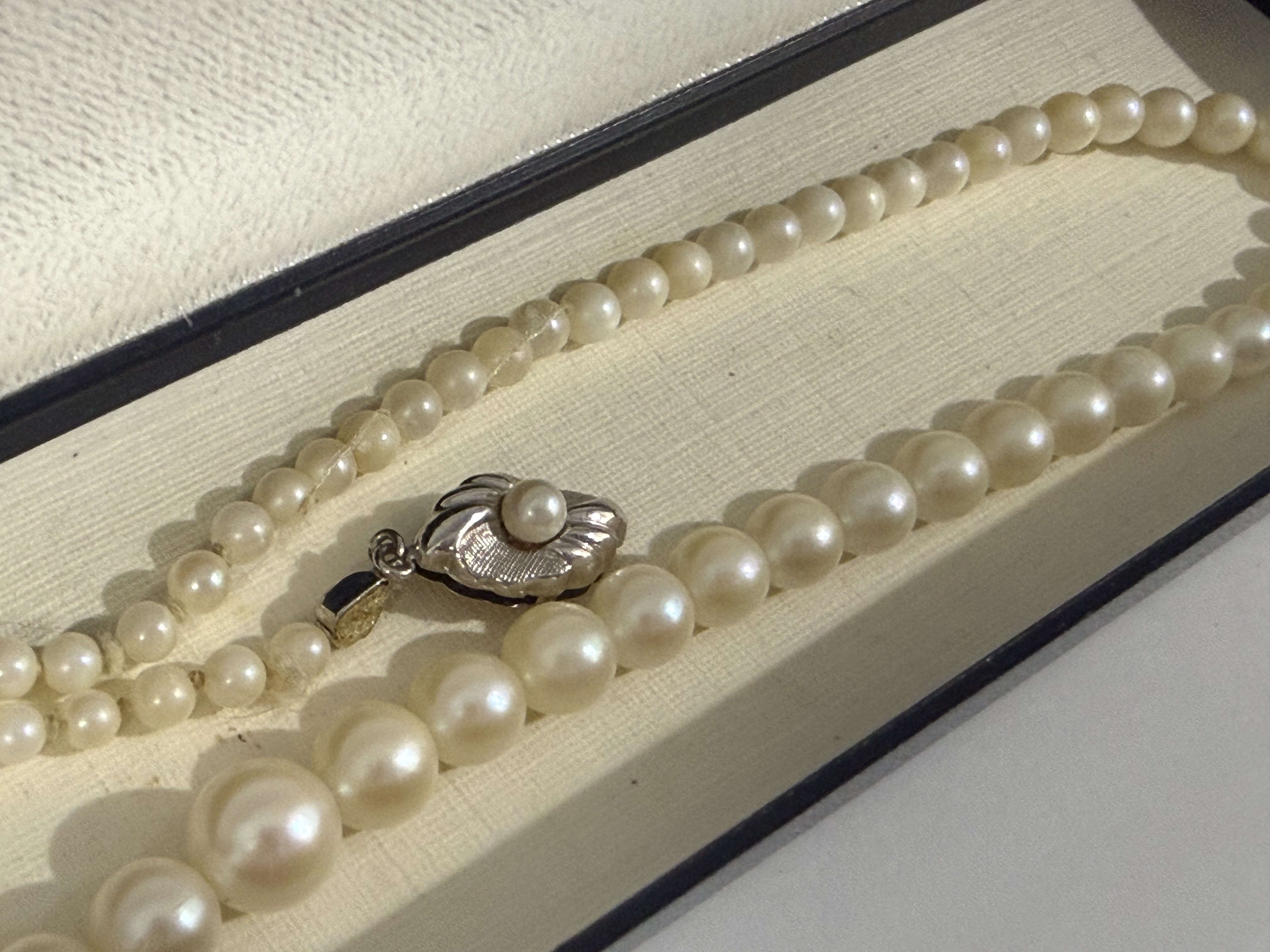
Family Heirloom Pearls (purchased in Japan in the late '40s)

Soaring Bean

New Member
Joined
Jun 3, 2026
Messages
1
Hello! Any help you can provide would be greatly appreciated! We used to have two of these necklaces, but now we only have one. I would love to figure out anything about these pearls, and to see if it's possible to replace the one that was lost.

1. Do the pearls feel slightly gritty or smooth when rubbed gently against another pearl? Edited to add: I have stopped recommending rubbing pearls against teeth (“Tooth test”) Teeth are harder than pearls and can scratch them.
If they are gritty, they are likely to be real nacre (genuine pearls.) If they feel smooth, they are likely imitation pearls.
They feel pretty smooth, to be honest.

2. Please provide clear, in-focus photos without flash against a white background (a paper towel works nicely.)
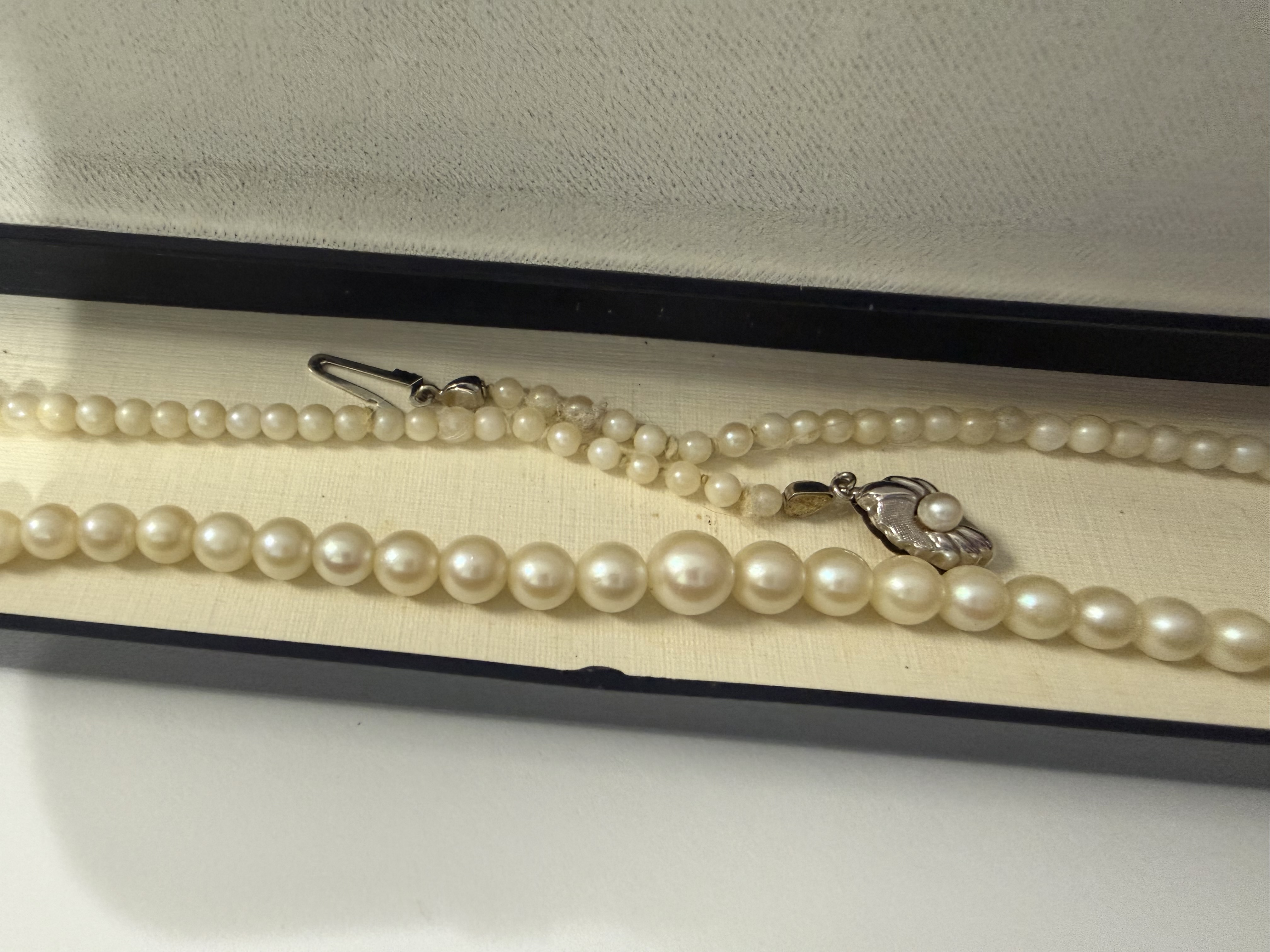
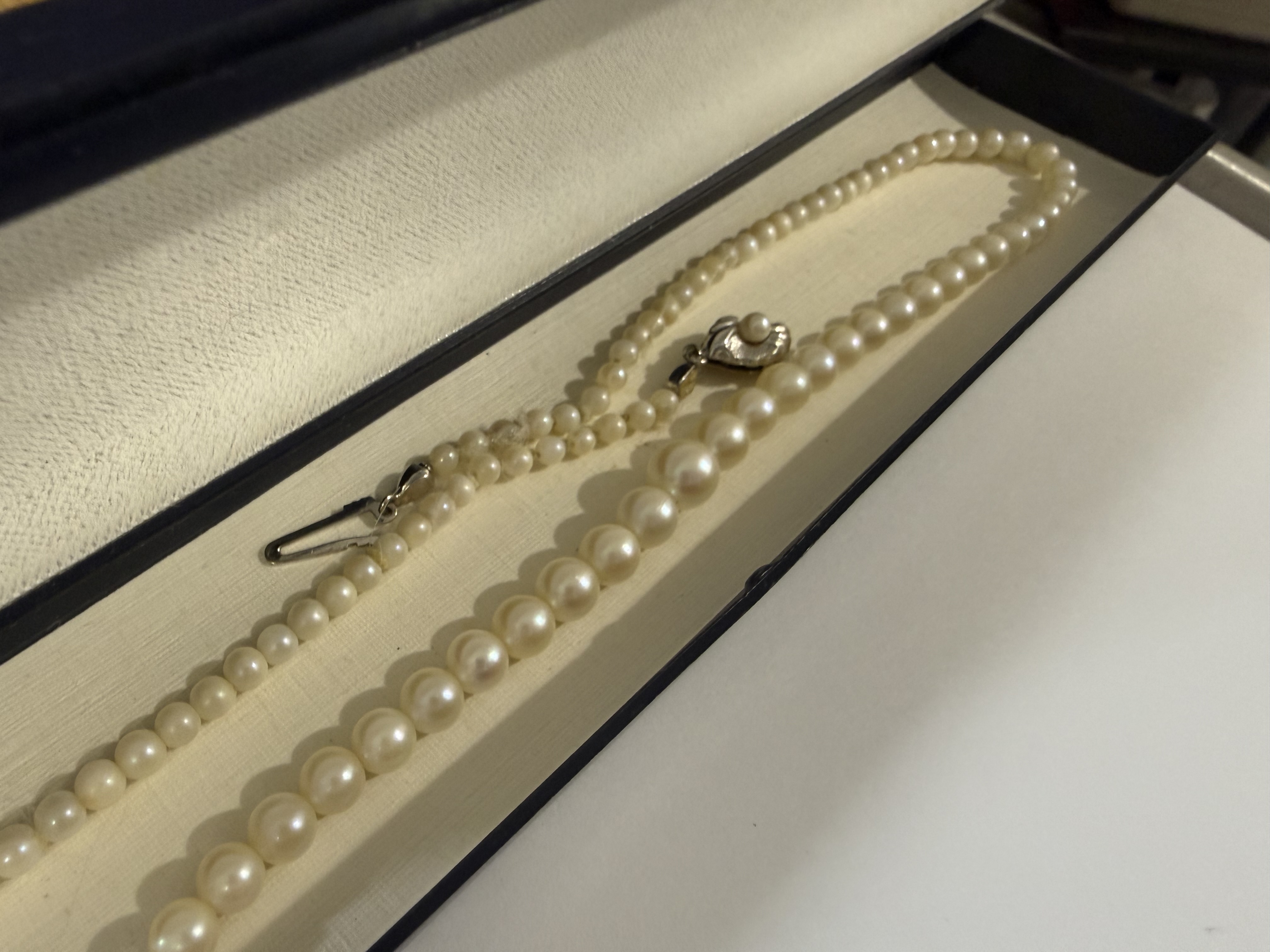
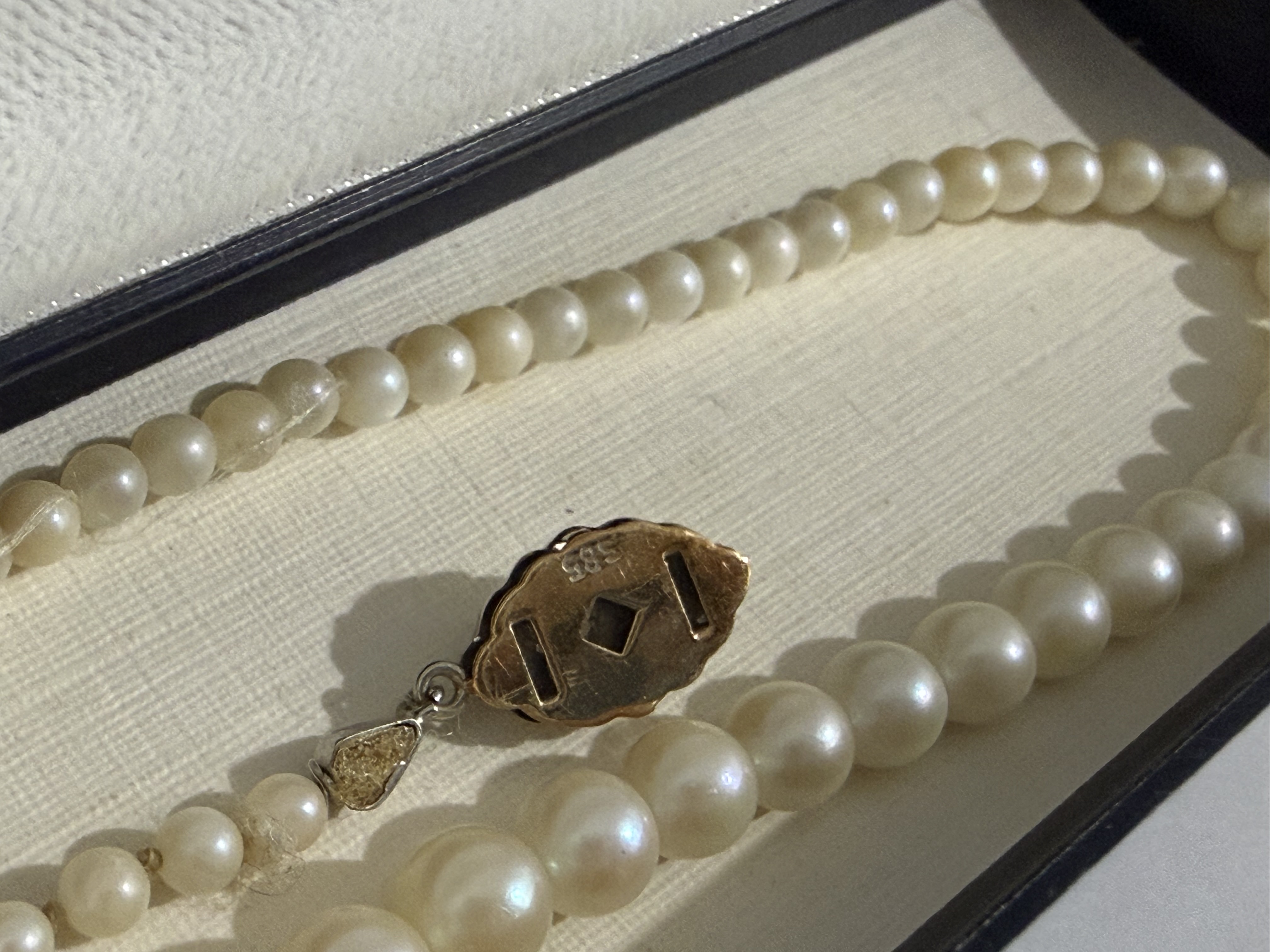
Include close-ups of the clasp (front and back) and a few of the pearls. If there are flaws, include a photo of those. Also the box they came in, and tags if you have them.
I note no flaws in the pearls themselves. The thread seems to not be in the best of shape (seems a bit frayed). I don't have any tags, but the box is navy blue, seemingly made of plastic.

3. Any history you can give us about the pearls. Where/when you or your relative got them, any documentation you have (receipts, appraisals), their price range if you know it, etc.
My grandfather purchased two necklaces while he was stationed in Japan, sometime after WWII. I do not know the price, but I know my grandfather was the son of sharecroppers, so he wouldn't have had much money to spare. When my grandmother passed away, she gave them to my mother and aunt.
My aunt has had her strand restrung. I am not certain whether the photo is of her necklace, or the one my mother received.

4. Describe any marks on the clasp. These may be numbers (14K, 585, 750, 925 etc.) or brand names or even pictures. If the clasp has stones, have you had them tested, or do you have documentation about what they are?
The clasp has 585 on the back, and seems to have a pearl on the front?

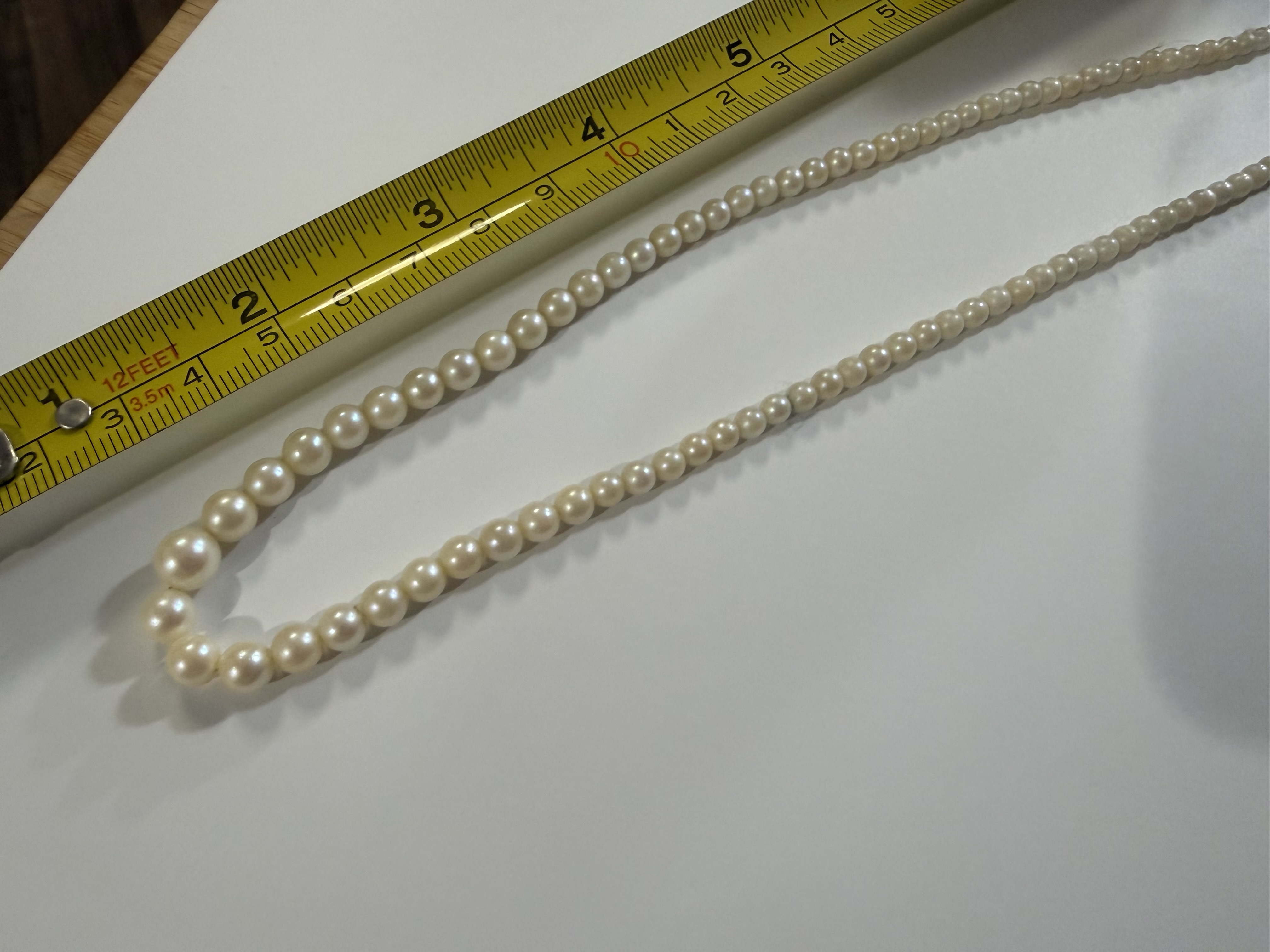
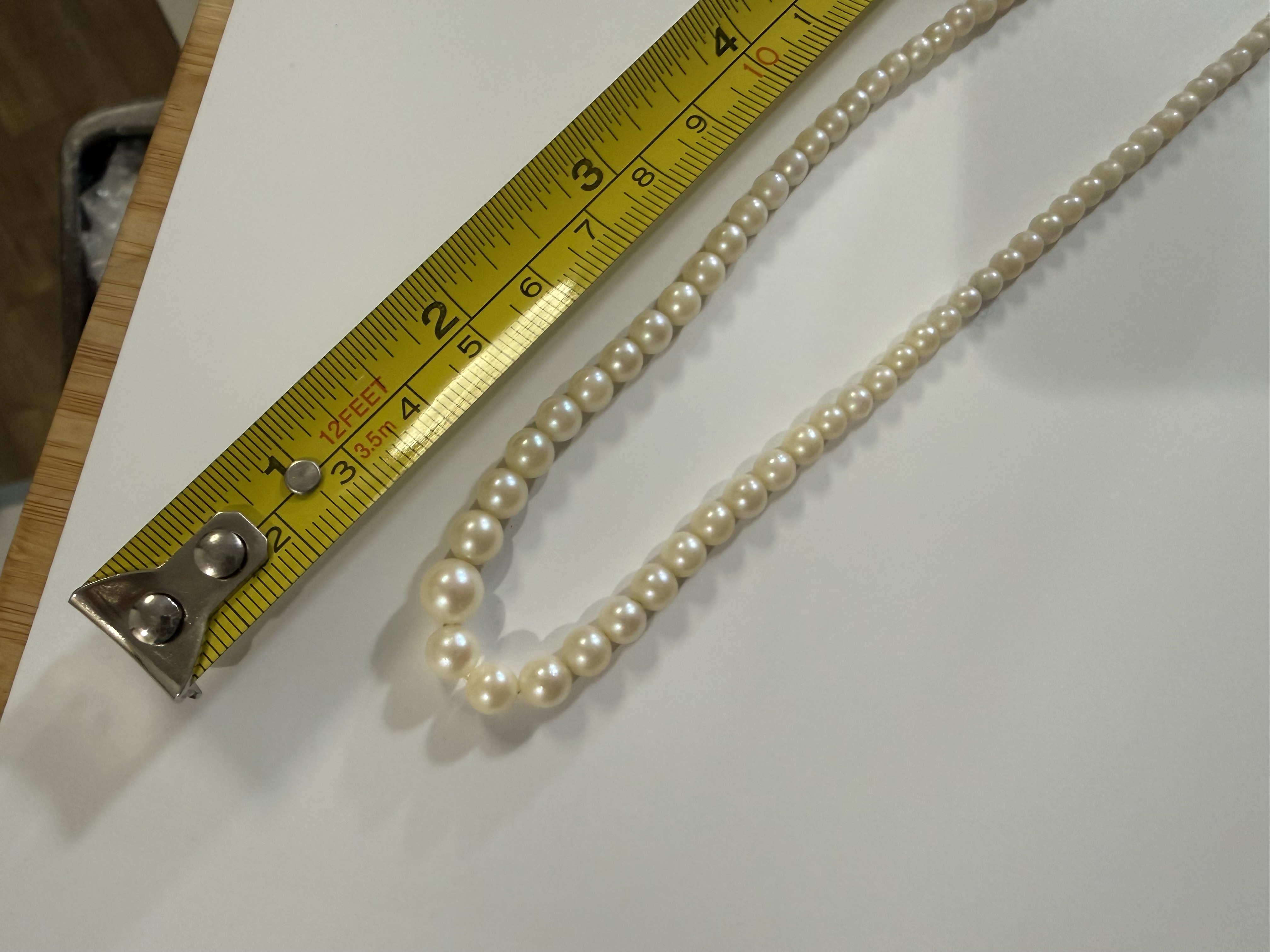
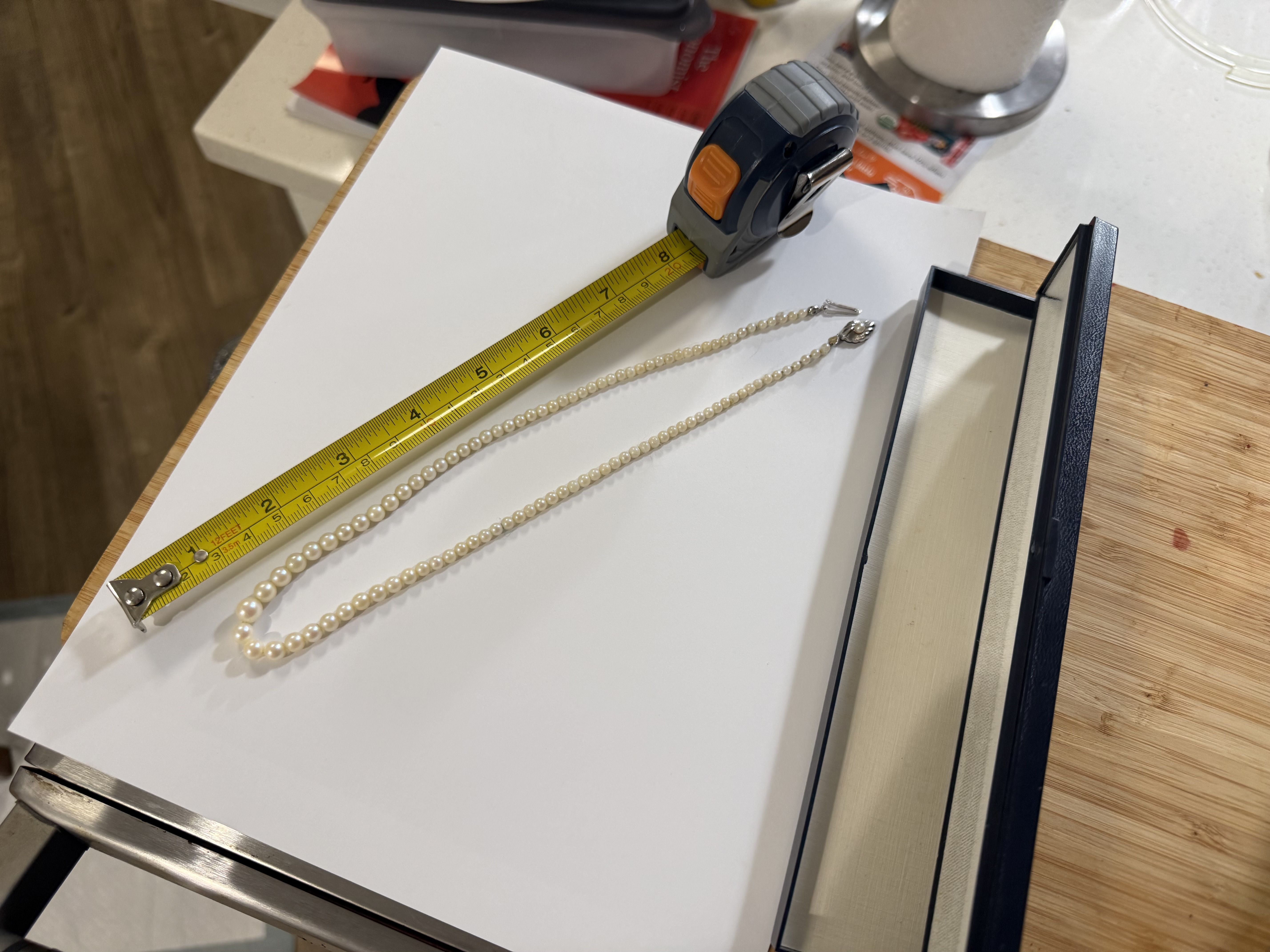
5. Measure the pearls, with a millimeter ruler if possible. If they are graduated, measure the largest and smallest pearls.
The largest pearl appears to be 7-8mm, and the next three on each side are ~6mm. At the midpoint in the string, they're 4mm, and at the end they're down to 2-3mm.
The pearls-only strand is 42.5cm, or a bit less than 17in
IMG_5774.jpeg
IMG_5776.jpeg
IMG_5777.jpeg
IMG_5778.jpeg
IMG_5779.jpeg
IMG_5780.jpeg
IMG_5781.jpeg
 
What a great story about your grandfather -- a special connection to history and the greatest generation.
 
Greaat photos and information-- thank you!

They look like akoyas to me, based on a few surface characteristics and some variation on the colors and overtones of the pearls. The gold clasp also argues for their likely being real pearls.
Not everyone feels the grittiness of pearls. Here are some other tests you can do:

1. Temperature test: Real pearls are cooler than fake ones, so if you have any other pearls that you know are real (or that you know are fake), you can compare their temperature by briefly touching the pearls to your lips, which are very sensitive to temperature. For this to work both pearls have to have been in the same ambient temperature for a short while, to eliminate that variable.

2. Loupe test: If you have a jeweler's loupe (10x magnifier) you can examine the surface. Real pearls look very smooth at that magnification while fake pearls have a rougher looking texture.

These graduated akoya strands are called momme or 3.5 momme strands (1 momme is 3.75 grams). They were sold in the post- WWII and Korean war eras to servicemen working in the Far East. Because the strands are graduated, and pearls are sold by weight, they didn't cost a great deal. Your grandfather could very well have afforded to buy them.

I found this some years ago online; the original link is now dead.

"In 1948, The Allied Occupation Forces liberalized the trade of cultured pearls, reopening the door to both the domestic and international markets. Between 1948 and the early 1960s, Japan’s Akoya industry was still living almost entirely off the production and export of “3.5 momme graduation necklaces’ The most popular “graduations", delivered by the thousands, had a wholesale price of $7.00 per strand, the equivalent of ~2,520 [Yen] at that time. Higher quality necklaces which were also very popular fetched $10.00 to $20.00 (Y3,600 to ~7,200).

For comparison, a Japanese male university graduate hired by a Japanese company in 1953 would receive a starting salary of approximately ~4,500 a month. (The large trading houses, however, such as Mitsui or Sumitomo might pay as much as ~6,000.)"

http://www.imperial-deltah.com/news2/pearls_and_occupied_japan.htm
 
I recommend restringing them. The silk is old and frayed and could break.

You'd want to give them a bath first. Swish a little mild soap (I like to use Dr. Bronner's Baby Soap, which is free of dyes and scent) in some distilled water (to avoid both chlorine and hard water minerals that would interact with the soap to form a dulling, hard to remove scum) and let them sit in the solution for 15 minutes or so, then gently wipe them clean with a soft cloth (I like to use microfiber), rinse and let them dry on a clean towel for 24 hours so the silk is completely dry.

This is a tutorial I wrote on how to restring pearls:
 
These are Akoya in the absolute sense. The answer is simple. There were no Chinese cultured pearls in the 40's.

It’s such a great experience to have a pearl necklace that is almost 100 years old. They are so easily damaged or lost. But luckily your family held it dear and put it in the right place so we can see it. The emotional value carried by the strand is way beyond its physical value. Hope your family can enjoy it and keep it beautiful for another 100 years.
 
Back
Top